

Communication is essential to society, and reading and writing allow people to express themselves, learn new things, and escape to fantastical realities. According to The New York Times, reading physical books has faltered in popularity. Most of modern reading consists of Instagram posts and TikTok comments. The internet is used for almost all research and entertainment. Technology has made finding information simple and quick.
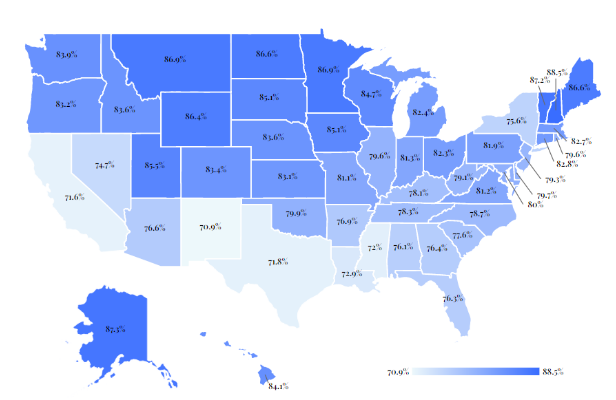
According to ProLiteracy, an organization of adult literacy programs, 28% of American adults read at or below level one, the lowest level on a five-tiered scale. This means that almost a third of the country reads and writes at the same level as kids aged five to seven. The literacy of the population is directly related to the economy, society, and national sustainability. But in a country with free public education, why is it that so many adults have such low literacy scores? There are a few reasons, one being poverty.
Most of the people with low literacy scores are living in poverty, according to ProLiteracy. Families living in this situation are often unable to afford books and resources that would help them practice their reading skills. Schools in poor areas also lack resources, and may therefore produce students lacking in education. Students dealing with poverty at home may have to leave school to help with family issues, which prevents them from making the most of their educational experience.
For adults wanting to work on their reading skills, there are very few opportunities for them to get education. This is especially true in rural areas where there are already few school options available. Searching for education as an adult is often frowned upon by society, and it is exceptionally difficult to find help that works around jobs and caring for children.
The other side of this issue is the lack of interest in English language arts seen in modern teens. Learning has shifted from textbooks to computer lessons and slideshows as new generations of teachers enter the school system. The excitement and emphasis surrounding reading has diminished greatly from both elementary and high schools. Even in the annual book fairs that happen in elementary and middle schools, most of the children are excited for the fun toys and trinkets rather than the many books offered.
Phones and electronic devices have trained users to respond to short phrases and bright colors. Every online interaction and game triggers the brain to release dopamine, a feel-good hormone that reinforces behaviors that make people happy. Even if a book is the most thrilling adventure ever written, it is still less desirable than an indefinitely long scroll break on Instagram Reels. Entertaining videos produce dopamine faster than books do, even if the book teaches a meaningful life lesson one would remember for a lifetime while a single Instagram reel is forgotten after three minutes of scrolling.
The ability to read, speak, and comprehend language is a gift often taken for granted. Not only does it prepare people to deal with grown-up jobs and paperwork, but it also opens up a world of possibilities for those who want to escape reality by reading, or even writing their own books.
Unpacking the Root Cause of Low Adult Literacy Rates
Aria Harig