

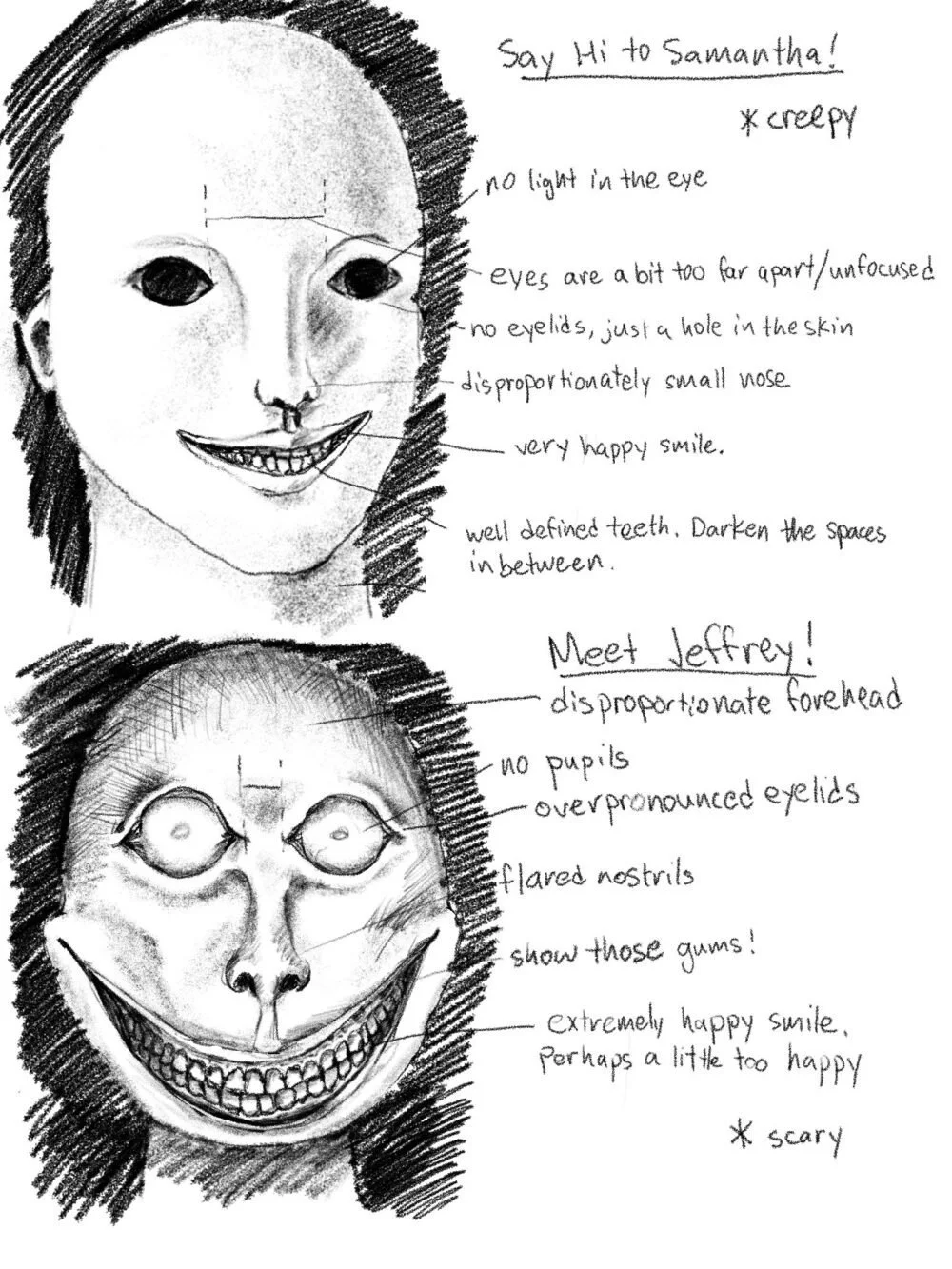
The Uncanny Valley explains the unsettling feeling that a person may get from looking at robots or drawing that look almost human, yet aren’t.
This idea first came to light in a paper titled “The Uncanny Valley”. It was written by a Japanese robotics professor named Masahiro Mori in 1978. Eventually, this was tied into a paper called “The Psychology of the Uncanny” by Ernst Jentsch which was published in 1906.
The reason for the Uncanny Valley existing varies on what theory someone believes. The theories include the predator theory and the disease theory. There are a few more, but these are some of the most widely believed.
This can also apply to sounds or voices. This is widely seen in both horror movies and games. A game director will take someone’s voice and dramatically change the tempo or the pitch. This keeps the human aspect but makes it seem wrong somehow. The idea of voices being a part of the Uncanny Valley ties into the predator theory.
The predator theory suggests that there was a reason for people to be afraid of something that looked and acted human at one point in time. This theory can be argued from both a scientific and a paranormal perspective. From the science perspective, there were multiple different types of Homo Sapiens around the world around the same time as our ancestors. Species that vanished after an amount of time.
On the paranormal side of this theory, there are many different mythologies that can provide an explanation into the Uncanny Valley. The most well known creatures are the Skin Walker and the Wendigo. The skin walker, from Navajo culture, was a witch with the ability to disguise or turn themselves into an animal. The Wendigo, from the Algonquian culture, were people who were possessed by an evil spirit that turned to cannibalism and can never be sated.
The final theory is the disease theory. This theory was founded on the idea that robots that seem close to humans have defects that make them not quite human. “... robots and androids in the uncanny valley may resemble human organisms with defects. Since the presence of defects implies disease, a feeling of aversion may be induced in the observers” according to Ayesh Perera, a Harvard graduate, who researched neuroscience and psychology under Dr. Kevin Majeres at Harvard’s medical school.
There are many reasons why we fear what we do not understand, and the Uncanny Valley is just one of many explanations.
The Science and Folklore of the Ominous: Connecting Skinwalkers to Modern Robotics
Rebecca Kooiker