

In 2025, the sun reached the solar maximum of its solar cycle. This cycle, also called the sunspot cycle, is an eleven-year process.
The solar maximum will keep going on throughout the next year. During this cycle, the sun will produce something called solar flares. These solar flares are produced when the magnetic fields on the surface of the sun release stored energy. When this stored energy is released, it causes massive explosions and large bursts of radiation.
These bursts of energy can actually be classified into different categories. “Flares are classified according to their strength. The smallest ones are B-class, followed by C, M and X, the largest. Similar to the Richter scale for earthquakes, each letter represents a ten-fold increase in energy output… Within each letter class, there is a finer scale from 1 to 9. C-class flares are too weak to noticeably affect Earth. M-class flares can cause brief radio blackouts at the poles and minor radiation storms that might endanger astronauts. Although X is the last letter, there are flares more than 10 times the power of an X1, so X-class flares can go higher than 9”, according to NASA.
The strongest solar flare ever recorded was level X28 and happened on November fourth 2003. This solar flare was part of a larger series of solar flares which was nicknamed the “Halloween solar flare”. While this solar flare was not pointed toward Earth, it still did massive damage. "The 2003 solar storms caused satellite communications blackouts. They caused localized power outages in Sweden”, according to EarthSky. These solar flares were not expected due to the fact that they happened during the decline of the solar cycle.
Another large solar flare happened on September 2, 1895. While this solar flare was not categorized by modern methods, it has been proven to still be quite large. It was seen by the British astronomer Richard Carringtion.
When the solar cycle reaches its solar maximum, its poles actually swap. During this event, “The domain of the sun’s magnetic influence (also known as the “heliosphere”) extends billions of kilometers beyond Pluto. Changes to the field’s polarity ripple all the way out to the Voyager probes, on the doorstep of interstellar space”, states NASA.
These solar flares have been happening for a long time and can have major effects on the planet.
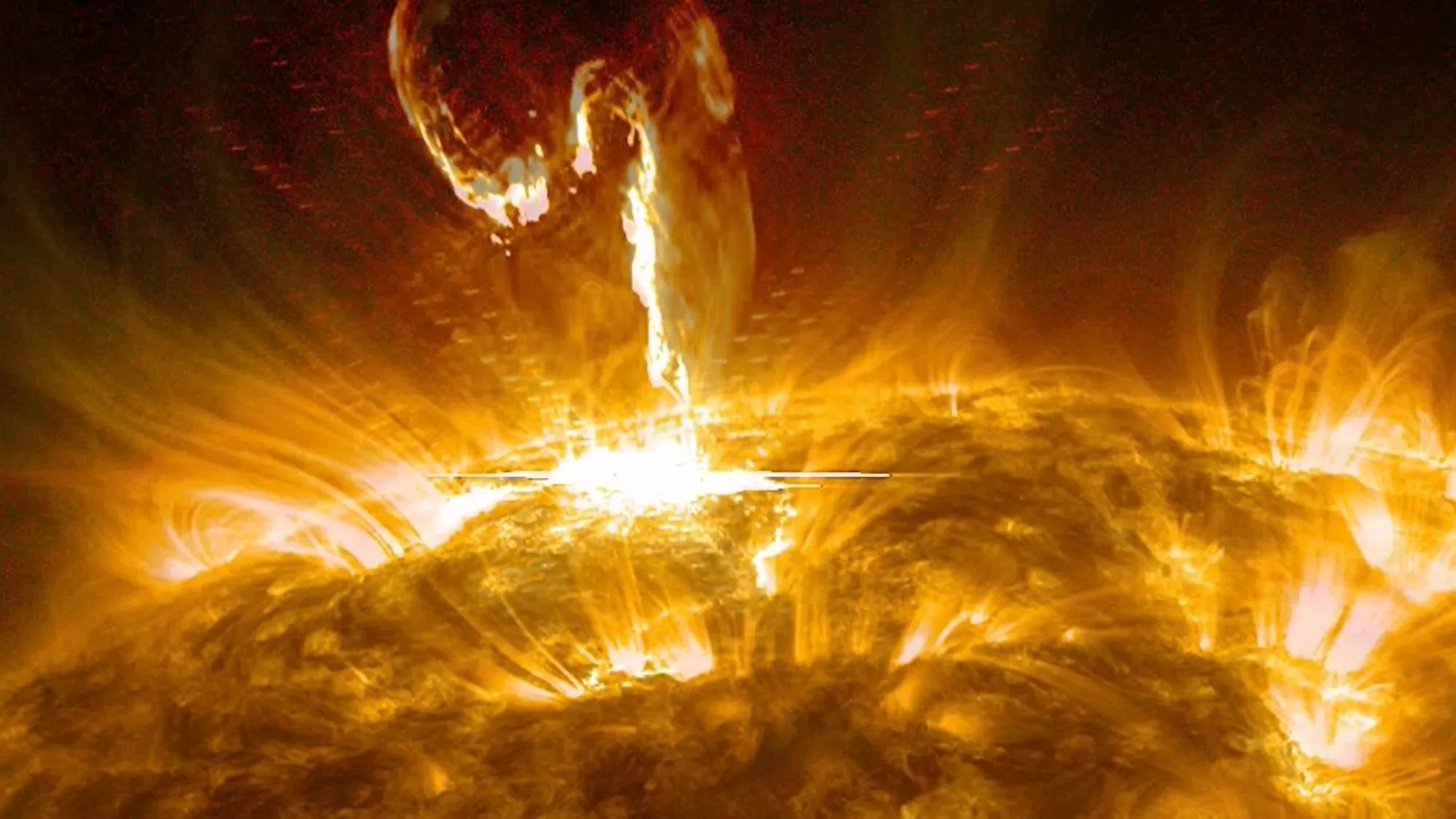
Solar Maximum in 2025: What Massive Solar Flares Mean for Earth
Rebecca Kooiker