
Polar bears are made to survive cold conditions, which is why with global warming on the rise, the polar bear population is decreasing. Polar bears, the largest carnivores on Earth, are designed to face extremely cold conditions. They have two layers of fur and a thick layer of fat to protect them from freezing, and to help preserve body-heat. Their paws can grow as big as eleven inches and are padded with soft bumps, or papillae, to help them balance on ice. Their powerful claws help them gain traction, their ears and tails are small to help prevent heat loss, and their skin is black to help absorb the sun’s warmth.
Global warming has multiple effects on polar bears. With the primary effect being melting sea ice. The bears rely on sea ice for hunting, breeding, and roaming. Without ice they struggle to catch seals which are their main source of food. While polar bears are gifted swimmers, swimming takes much more energy, causing the bears to turn to foraging along the shore. The problem with this is that the fish, seaweed, and trash found along the shore don’t provide nearly as much energy or nutrients as seals do.
With sea ice melting away polar bears are traveling greater distances to find shelter and food. In some cases, polar bears venture too close to human settlements, which leads to an increase in human-wildlife conflicts. These interactions are dangerous for both the humans and bears, since either may be killed when trying to protect themselves and their territory.
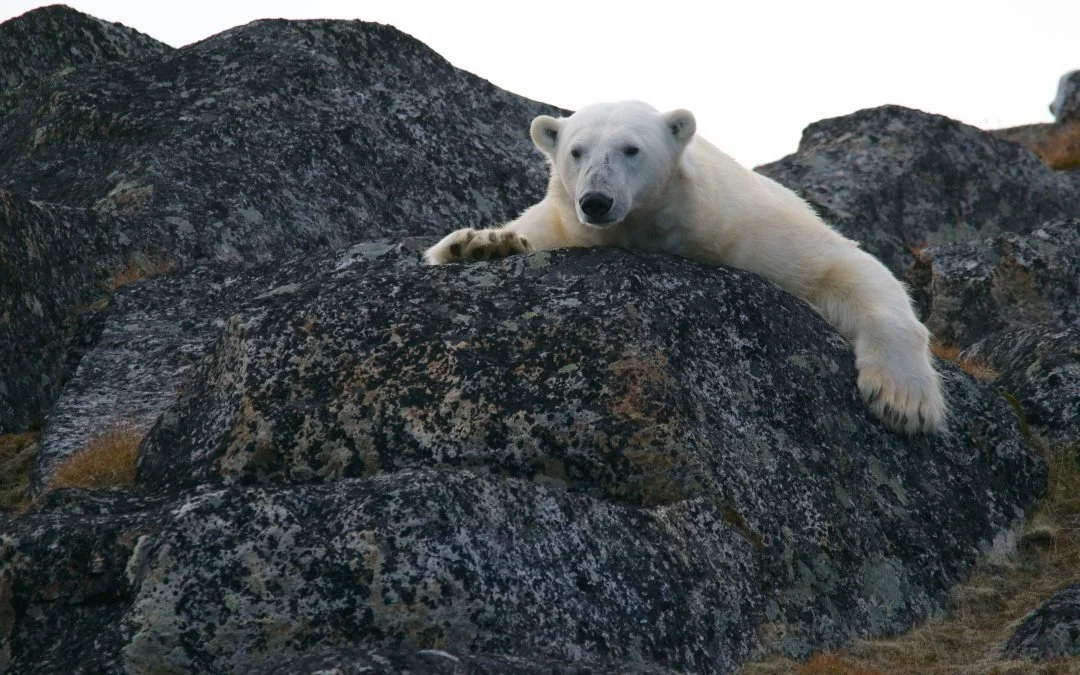
As temperatures rise, the thick skin and fur polar bears are protected with become more harmful than helpful. Since the bears are so well insulated, the change in climate causes them to overheat easily. To try and avoid overheating the bears move slowly and rest often, keeping them from hunting and getting enough food.
The polar bear crisis is just one example of global warming’s impact on Earth. Efforts to mitigate climate change, such as reducing greenhouse gas emissions and preserving animal and plant habitats, are essential to the survival of not only polar bears, but species of all kinds.
Polar Bears in Peril: The Devastating Effects of Rising Temperatures
Aria Harig