

The 2025 AP Score Distributions were released throughout the summer, with final distributions being published throughout October in response to late exam scoring, causing continuous updates to the reported percentage on the College Board website. Compared to 2024, there was a slight increase in the percentage of students who scored a 3 or higher. This small increase is significant because 2025 was one of the first AP exams to be almost completely digitized with 28 of the exams being moved to the College Board’s Bluebook app. So far, 16 of the exams are entirely digital while 12 of them are hybrid: meaning that the multiple choice is answered on the app while the free response questions are handwritten.
AP English Language and Composition is a notable example of a significant increase in passing rates that can be correlated with the essay portion being digital. Students benefit from the ease of typing and digital revision tools, while graders can assess essays more efficiently without struggling with handwriting. In 2024, 54.6 percent of the students that took the AP English Language and Composition exam scored a 3 or higher. While 74 percent of the students that took the exam this past spring scored a 3 or higher.
Beyond digitization, the College Board has been making a wide variety of changes to specific AP courses. For example, AP Psychology was originally a 75 minute, 100 multiple choice question exam but is now a 90 minute, 75 multiple choice question exam. The score distributions showed a 10 percent increase on the overall passing rate compared to the 2024 passing rate. These distributions help not only the College Board but students and teachers alike see the success of changes made to AP courses each year.
AP Score Distributions help upcoming AP students understand exam difficulty and performance trends over time. They also help them gauge future performance on the exam. The score distributions are something that many students and especially teachers look out for. Colleges also look out for the score distributions because they help provide a more accurate context for a student’s achievement. Distributions make it easier for students, teachers, and colleges to compare their, their students’, or their applicants’ test scores to their peers nationwide.
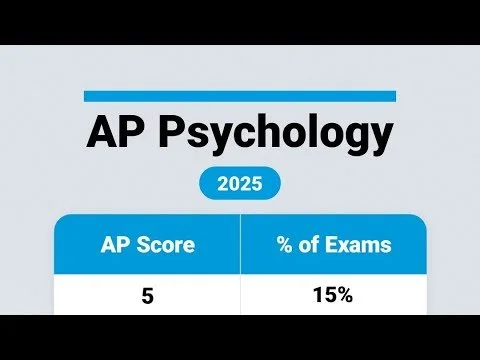
AP Score Distributions bring insight into the digitized 2025 AP exams
Madelyn Bird