
Grade inflation, the practice of awarding higher grades for work that would have received lower grades in
the past, has become a growing concern in the United States high schools. This trend undermines the
integrity of eduction, devalues genuine academic achievement, and hinders students’ preparedness for
higher education and the workforce.
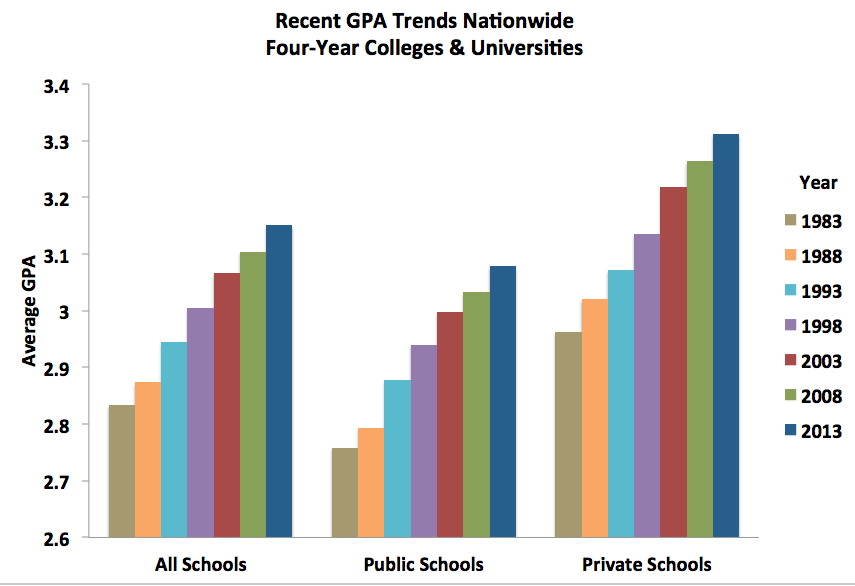
Over the past decade, grade inflation has accelerated significantly. According to a 2022 report by ACT,
“...average GPAs in high schoolshave steadily risen, while standardized test scores have remained
stagnant or declined.” This mismatch suggests that higher grades are no longer reflective of improved
learning outcomes. A similar study by the College Board found that nearly half of high school students
over 3.5 GPA struggle to meet college readiness benchmarks such as the SAT.
One major driver of grade inflation is the increasing pressure on educators and schools to demonstrate
student success through metrics like graduation rates and college acceptances. This pressure often
incentivises schools to create an illusion of achievement.
The consequences of grade inflation are significant. First it devaules academic grades, making it difficult
to distinguish between students hwo have mastered material and those who have not. A 2018 report from
the American Educational Research Association noted that, “...75% of college professors believe that
incoming students are less prepared [for college] than they were a decade ago.” This trend undermines
the merits of higher eduction, as grades no longer reliably indicate a students abilities or efforts.
Additionally when students receive inflated grades, they may enter college with unrealistic expectations
of their academic capabilities, leading to struggle in rigorous programs.
To combat grade inflation, several strategies can be implemented. Standardized assessments, though
their merits are disputed, can be used as an indicator of student performance. Other strategies include
holisti evaluation methods, including portfolios, interviews, and standardized scores rather than
accounting so much on GPAs alone.
While the intention behind grade inflation may be to encourage and reward students, the long-term
consequences harm both individuals and the education system as a whole. By recognizing and
addressing the issue, schools can rstore the integrity of academic achievement and better prepare their
students for the challenges of the real world.
Higher Grades, Lower Standards: The Consequences of Grade Inflation in Education
Evelyn Rousseau