

More often than not, many students walk into school with dark circles underneath their eyes, energy drinks in hand, and anxiety-ridden energy.
Sometimes, students forget to prioritize themselves and their mental well-being because it feels as if there aren’t enough hours in the day. Balancing an academic career, social life, extracurriculars, and often sports or a job, leaves students with what feels like barely any free time. The Association for Supervision and Development reports that 52% of students reported a lack of time to decompress, have fun, or spend time with friends and family. Eventually, the vicious cycle of attempting to manage everything can cut into sleep schedules and mental health.
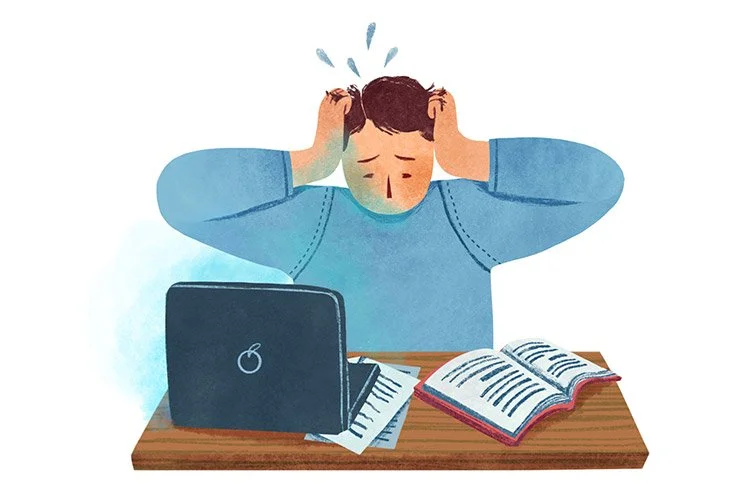
There are a plethora of ways that students’ mental health can be damaged by school, academic pressure being one common stressor for teens. Sometimes, it feels as if getting good grades is the be all, end all. In high school, maintaining good grades can feel especially important. According to the Pew Research Center, an unbiased fact tank, 68% of U.S teen students ages 13-17 felt pressured to get good grades, and on top of that, 33% of students felt pressured to participate in extracurricular activities. Many high school students overwork themselves in order to increase their probability of getting into a good college. “Teachers pile up work, on work, on work, and it can stress you out if you don’t keep up with it. Even if you are keeping up with it, it can stress you out,” said sophomore Sophia Clark. When a student is being pressured by themselves or others to excel academically, experts say that not getting good grades can often lead to self-doubt, anxiety, or depression.
Furthermore, mental health can easily be negatively affected by sleep deprivation. According to the CDC, two thirds of high school students get less than eight hours of sleep each night on average. A lack of sleep in teenagers can be linked to serious physical and mental health complications, such as obesity, diabetes, injuries, mental health issues, behavioral or attention issues, and negative academic performance. “I have to stay up at night to do all of my homework until 11:00, because I’m in cheer and it’s hard to do two things at once,” said sophomore Kinsley Eckerty. It is highly important for students to get a sufficient amount of sleep in order to excel academically, but more importantly, mentally. It is significantly less likely for students to show academic progress without first investing in their mental health.
Some students face external situations outside of the academic world, such as a negative home environment, bullying, or issues within their families. The National Bullying Prevention Center states that one in every five students has faced bullying in school. The U.S department of education conducted a study during the 2021-2022 school year, and 100% of student participants reported witnessing or being aware of bullying during the school year. When students arrive at school feeling upset or already stressed out, they aren’t going to be able to focus and give their best effort to numerous classes on a daily basis.
Current science shows that school plays a crucial role in preparing students for adulthood, but it can quickly become a source of mental health problems for many by overwhelming students with assignments, a negative environment, or pre-existing issues causing more stress.
Beyond Grades: External Stressors Eroding Student Well-being
Avery Erdei